Good news you
want
to read
Discover positive stories from the top reputable sources in culture, science, tech, and more.
Join for free








Notable stories from past week








 World
World
Good news happening across the globe.

 ABC
ABC
WATCH: Deserving veteran and family surprised with tickets to Phillies game
ABC News' Ike Ejiochi spoke with veteran Tina, along with her service dog Erik, about her work providing service animals to veterans and surprised her and her family with tickets to the Phillies game.
World

 The Guardian
Paul McCartney announces 18th solo album, The Boys of Dungeon Lane, promising introspection and revelation
The new album draws from the musician’s early childhood memories of growing up in Liverpool and his relationship with Lennon, with musical styles that span his entire career • Alexis Petridis on single Days We Left Behind: ‘As McCartney-esque as possible’ Paul McCartney has announced his 18th solo album, The Boys of Dungeon Lane – its title a reference to the route from Liverpool to the Speke shoreline, the area where the former Beatle spent his young childhood. A press release described the 14-track record as McCartney’s most introspective album yet, a “collection of rare and revealing glimpses into memories never-before shared, along with some newly inspired love songs”, presumably about McCartney’s third wife, Nancy Shevell, whom he married in 2011. The musical styles are said to span his entire career, including “Wings-style rock, Beatles-style harmonies, McCartney-style grooves, understated intimacy, melody-driven storytelling, character songs”. Continue reading...
World




 Science
Breakthroughs that shape tomorrow.

 The Guardian
Transporting the most expensive and volatile substance on Earth – podcast
A box the size of a filing cabinet was lifted by crane, slowly moved and placed very carefully in the back of an unassuming lorry earlier this week. What looked like a casual drive around the Cern campus was actually a world-first experiment in transporting antimatter, the most expensive and volatile substance on Earth. To find out why scientists wanted to achieve this milestone, and what happened on the journey, Madeleine Finlay hears from the Guardian’s science editor, Ian Sample, and the Cern physicist Dr Christian Smorra. Please drive carefully: scientists plan to transport volatile antimatter for first time Support the Guardian: theguardian.com/sciencepod Continue reading...
Science




 Technology
Innovations improving everyday life.

 The Guardian
Wordle inventor gets ahead of the game | Letters
Julius Pursaill, Andy Roberts and Jane Oberman respond to Polly Hudson’s article that decried Josh Wardle for creating a new game Josh Wardle, the inventor of Wordle, a game that gave huge pleasure to so many people during lockdown, reportedly sold it for a seven-figure sum. According to Polly Hudson (The Wordle guy’s latest move tells us a lot about modern-day ambition, 22 March), he now has the temerity to create another word game, Parseword, rather than kicking back on his yacht. Imagine if everyone who has a creative impulse kicked back after their first recognised achievement – if Michelangelo had kicked back after creating the Pietà, or Picasso had kicked back after Les Demoiselles d’Avignon. Well done to Wardle, keep creating. Julius Pursaill London • It seems a little unfair to characterise Josh Wardle’s new game as trying his luck again, equating it with naked ambition. It certainly seems out of kilter to be drawing parallels with that and the rampant egotism displayed recently by Timothée Chalamet. Wardle just strikes me as a bit of a word nerd and coder who likes making games. His new one seems to be a love letter to cryptic crosswords – it certainly isn’t a tilt at creating another viral sensation. Andy Roberts Witney, Oxfordshire Continue reading...
Technology


 Space
Space
Uplifting discoveries beyond Earth.

 Universe Today
Looking For Nearby ‘Project Hail Mary’ Worlds
It’s out. The top sci-fi draw of the year Project Hail Mary is now showing in a theater near you. The movie tells the tale of middle school teacher Ryland Grace, who is sent on a one way, last ditch mission to save humanity. The story is a refreshing take on first contact and just how different life out there could be… but are there real ‘Adrians’ or ‘Erids’ out there? A new paper published in the Monthly Notices of the Royal Astronomical Society identifies 45 rocky worlds with a potential for life, out of the currently 6,281 exoplanets known.
Space
 NASA
NASA
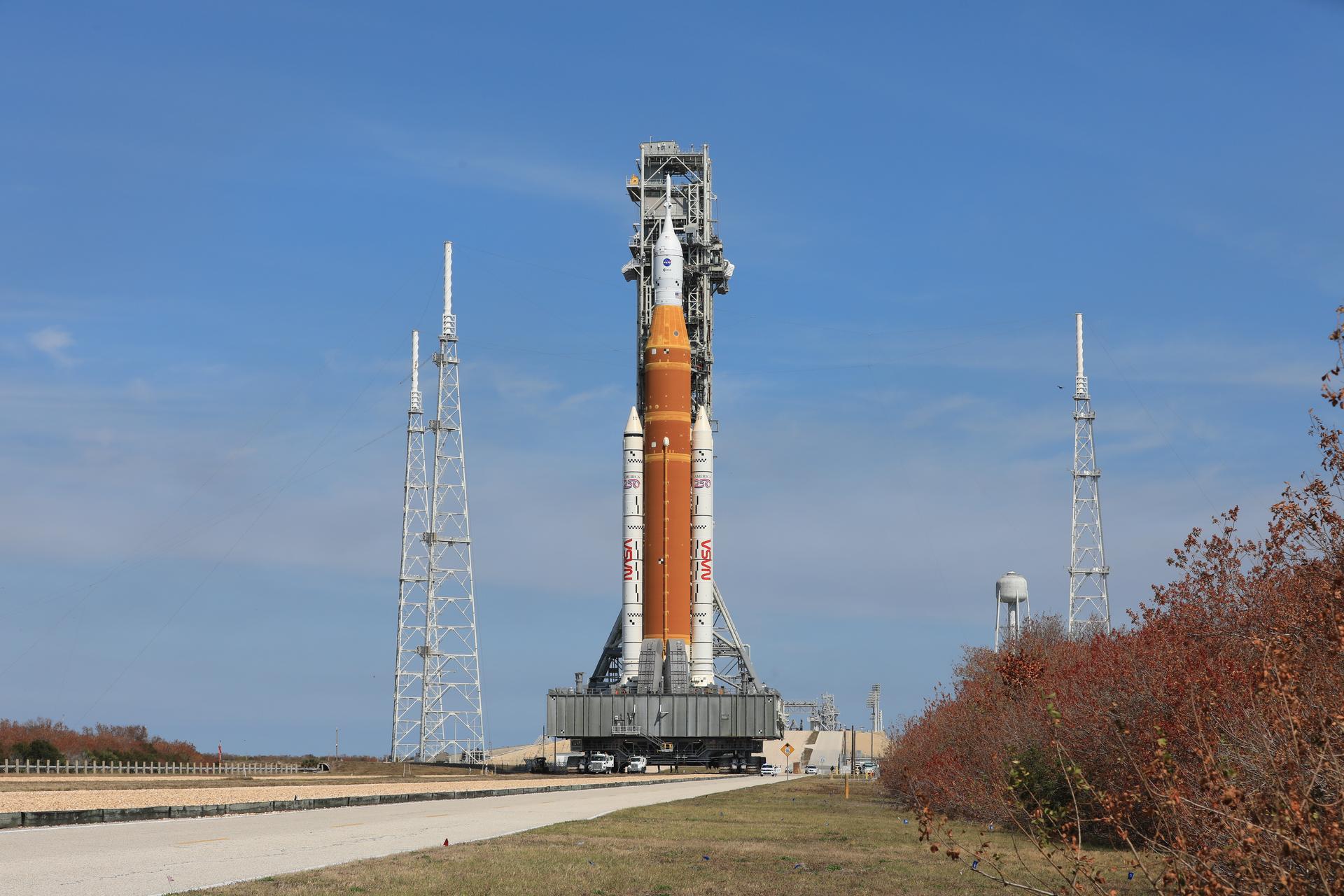
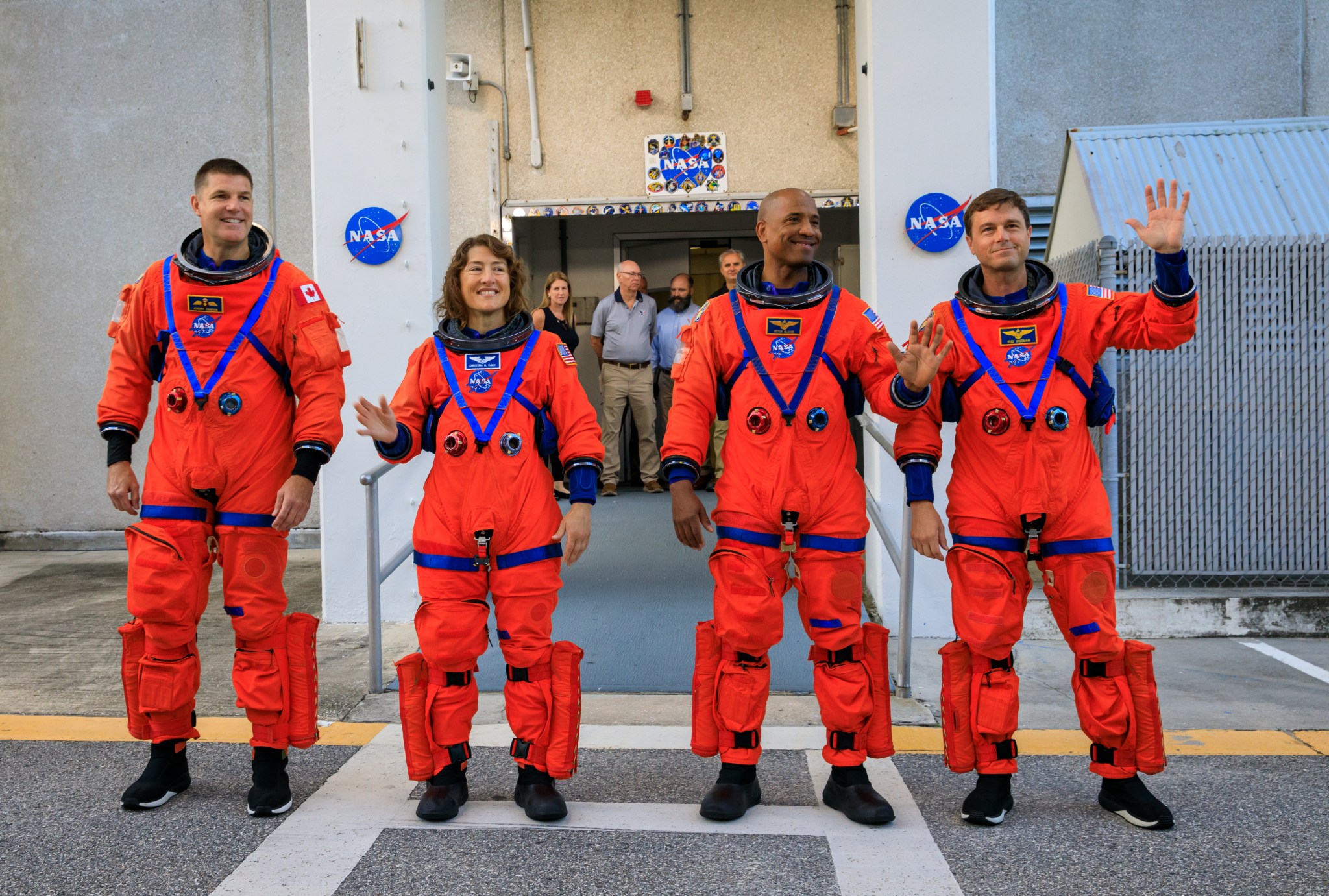
La NASA anuncia la cobertura de la de la primera misión tripulada Artemis alrededor de la Luna
Diversos eventos previos al lanzamiento, del lanzamiento y de la misión Artemis II de la NASA alrededor de la Luna se transmitirán en línea. La agencia tiene como fecha objetivo no antes del miércoles 1 de abril para este vuelo de prueba, con una ventana de lanzamiento de dos horas que se abre a las […].
Space

 Phys.org
Limiting space junk's threat by predicting its mess in the Earth-moon neighborhood
Debris from moonbound spacecraft has left craters on the lunar surface since the U.S. Apollo missions. But the moon is not used to being surrounded by debris. With an expected resurgence in lunar missions in the coming years, such as the U.S. Artemis II test flight, Purdue University engineer Carolin Frueh is researching how to track the likely increase in spacecraft debris and minimize its impact in the area between the moon and Earth, called the cislunar region. In the next decade, at least 30 missions could be launching to the cislunar region.
Space

 Health
Advances for a healthier future.


 Medical Xpress
New MRI system could aid early detection of heart failure
The heart's ability to use oxygen efficiently is a critical indicator of its health, but tests to measure this function have drawbacks that can limit their use. A new Cedars-Sinai Health Sciences University study found that a new MRI system developed at Cedars-Sinai might overcome this challenge. The findings, published in Science Translational Medicine, could one day improve management of heart failure, in which the heart fails to pump enough blood to meet the body's need for blood and oxygen.
Health



 The Wall Street Journal
Merck has reached a nearly $6 billion cash deal to buy the cancer biotech Terns Pharmaceuticals and its promising leukemia treatment
The drugmaker has been seeking to bolster its pipeline as its top-selling drug, Keytruda, is set to lose patent protection.
Health
 ScienceDaily
Scientists discover why this deadly lung cancer keeps coming back
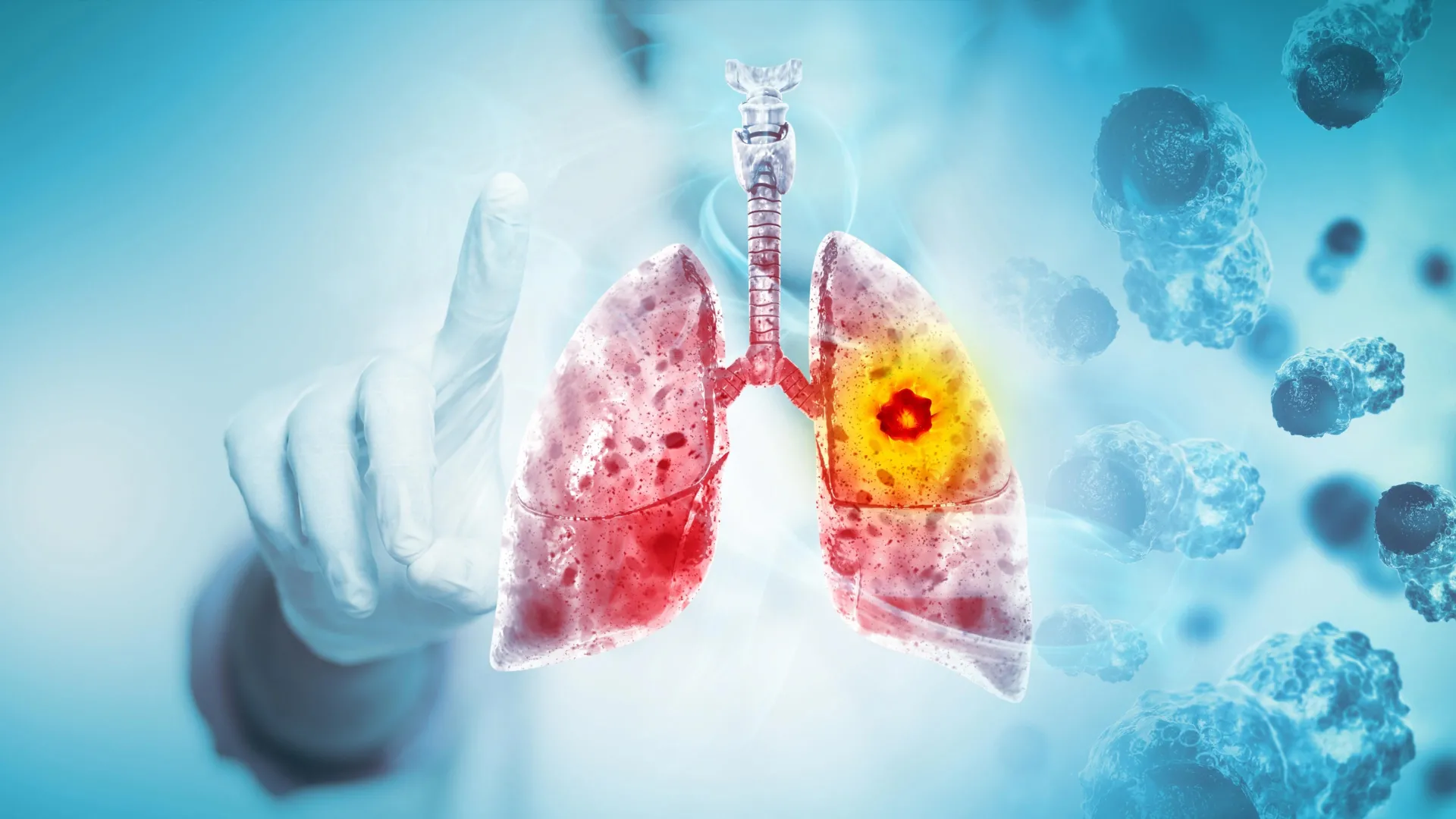
Scientists have discovered that losing a key protein in small cell lung cancer triggers inflammation that actually helps tumors grow and spread. Even more surprising, it pushes cancer cells into a more aggressive, neuron-like state linked to relapse.
Health
 Environment
Progress for a cleaner, greener world.
 ScienceDaily
This cow uses tools like a primate—and scientists are stunned
A cow named Veronika has stunned scientists by using tools in a flexible and purposeful way. She chooses different ends of a brush depending on the part of her body and adjusts her movements accordingly. This level of tool use is incredibly rare and was previously seen mainly in primates. The finding hints that cows may be much smarter than we assume.
Environment
 The Guardian
Hair compost, sugar waxes and refillable shampoo: inside a California low-waste salon
Scisters Salon & Apothecary in the San Diego area is committed to sustainable beauty and going low-waste The first thing you notice when you walk into Scisters Salon & Apothecary is what isn’t there. No wall of glossy plastic bottles promising “repair” or “shine”. No sharp chemical tang or aerosol haze. The only trash can is a tiny basket that mostly collects coffee cups and gum wrappers clients bring from home. Instead, the shelves of this southern California salon are lined with large refill containers of shampoo and conditioner, houseplants dot the space, hair clippings are swept away for compost, and the air carries a trace of bergamot and vanilla. Continue reading...
Environment
 Phys.org
From tropics to poles: How Pacific Ocean warming sets the stage for Antarctic stratospheric changes months later
The tropical Pacific Ocean and the frozen expanse of Antarctica sit more than 10,000 kilometers apart. Yet new research shows that when surface waters warm near the equator in northern winter, the Antarctic stratosphere responds months later—a delayed reaction that could improve predictions of Southern Hemisphere climate patterns.
Environment

 France 24
Thousands flock to see Greece’s annual 'pink veil' of peach blossoms
Visitors from across Greece but increasingly from across Europe as well are flocking to see the blossoming peach trees in the Veria region, located roughly 72km west of the country's second city Thessaloniki. The growing popularity of the annual spring celebrations organised around the blooms is proving to be a boon for local farmers and the tourism industry.
Environment


 NPR
NPR
This community festival embraces the joys of a frozen lake — while it still has one
As climate change accelerates, local experts say the date Wisconsin's Lake Mendota freezes over is getting later, making safe conditions for activities that rely on snow and ice harder to predict.
Environment
 Business & Economy
Positive trends in business and growth.


 Business Insider
I went to Japan during peak cherry blossom season and found an easy way to escape the crowds at popular tourist attractions
Japan is experiencing record tourism this year, and many sightseeing attractions are packed with crowds. Still, there's an easy way to find some zen.
Business & Economy


 Culture
Inspiring stories from arts and society.

 Daily Mail
The Japanese cleaning method that will revitalise your home in 4 steps - and beat your 'clutter blindness'
Spring has arrived, and with it comes the annual urge (okay, societal pressure) to fling open the windows, clear out the clutter and finally tackle that long-overdue home reoganisation.
Culture


 The Guardian
Frank Bowling: Seeking the Sublime review – shipwrecked Ophelia points the path to freedom
Fitzwilliam Museum, Cambridge This illuminating exhibition traces the British Guyanan’s faltering first steps of painting with a social conscience to his escape from London to New York and abstraction In 1961, when Frank Bowling was making the earliest work in this small but illuminating show, painters were expected to be either one thing or another, over a range of categories. They had to be either political, using art to better society, or formalist, insisting art be judged on its own terms. They had to belong either to the European or the American tradition. And they had to be a Black artist, meaning they had a duty to speak on behalf of the communities they were presumed to represent, or an artist (full stop), meaning that they were allowed to speak on behalf of everyone about whatever subject they chose (on condition they were white and ideally male). This young British-Guyanese artist, it soon becomes clear, did not like these options. The early works suggest that he did at least try to fit in: 4 Horsemen of the Apocalypse, made when Bowling was at the Royal Academy in London, might have been designed to meet the professors’ expectations. A screaming black face amid this shambles of tortured bodies is linked by the wall text to the 1961 murder of Patrice Lumumba, the former prime minister of what is now the Democratic Republic of the Congo, positioning Bowling as both a postwar existentialist grappling with the horror of the camps and a Black artist speaking to the postcolonial experience. Beggar No 5 (1962–63) is so heavily indebted to Francis Bacon that it would be dismissed as juvenile pastiche if it weren’t for the subject matter. It points to a career as a professionally Caribbean artist making paintings about “cane-cutting and suffering”, as Bowling once put it. Continue reading...
Culture