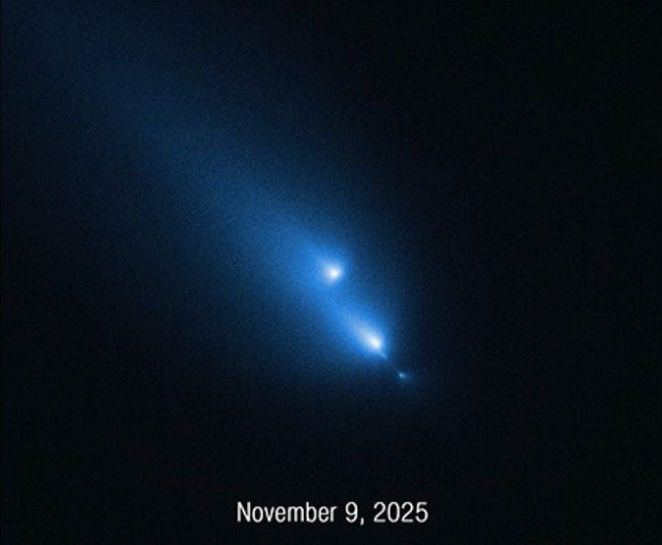
The sudden fragmentation of comet C/2025 K1 (ATLAS) serves as a poignant reminder that in space, even a "failed" observation can lead to a breakthrough. Because the research team’s original target was unavailable, they turned Hubble’s gaze toward K1 just as the stress of its solar flyby became too much to bear. The result was a series of images capturing the comet breaking into at least four distinct pieces, a phenomenon that is notoriously difficult to time and even harder to witness with such clarity.
By "cracking open" the comet, the event revealed the primordial, icy materials that have remained shielded from solar radiation for billions of years. This allows scientists to distinguish between a comet's evolved surface and its original, primitive composition. While the fragments are now drifting away into the constellation Pisces, the data they left behind—including a surprising depletion in carbon—is expected to refine our understanding of how the solar system first took shape.