
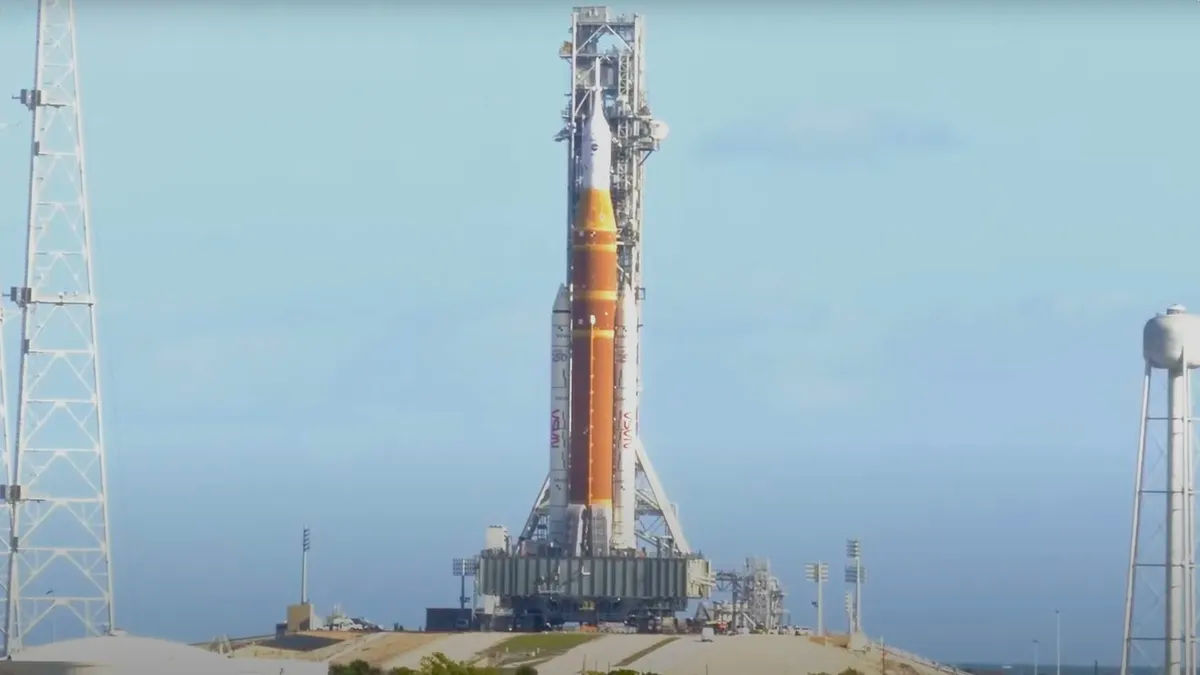
Under the cover of night, the 322-foot Space Launch System (SLS) rocket began its slow, four-mile journey from the Vehicle Assembly Building to Launch Pad 39B at Florida’s Kennedy Space Center. Transported atop a massive crawler-transporter used since the Apollo era, the vehicle moved at a deliberate pace of just one mile per hour to minimize mechanical stress. This rollout marks the final transition toward the first crewed lunar mission since 1972.
The return to the pad follows a month of meticulous maintenance. In February, engineers identified a helium-flow issue in the rocket's upper stage that necessitated moving the vehicle back indoors for repairs. During its time in the assembly building, teams resolved the pressurization problem, replaced flight batteries, and retested critical electrical systems to ensure the spacecraft is prepared for the rigors of deep space.
As the hardware is secured at the pad, the crew of four has entered the final phase of their preparations. NASA astronauts Reid Wiseman, Victor Glover, and Christina Koch, along with Jeremy Hansen of the Canadian Space Agency, began pre-flight quarantine this week in Houston. Their ten-day mission will involve a single loop around the Moon to test life-support and communication systems, serving as a vital precursor to future lunar landings.
The return of humans to the lunar vicinity represents a bridge between the pioneering efforts of the 20th century and a new era of sustained exploration. By addressing technical hurdles with patience rather than haste, mission teams are prioritizing the safety of the crew while maintaining the momentum of the Artemis program. This mission stands as a quiet reminder of the collective focus required to venture beyond Earth’s orbit, turning the complexities of engineering into a steady path toward the stars.