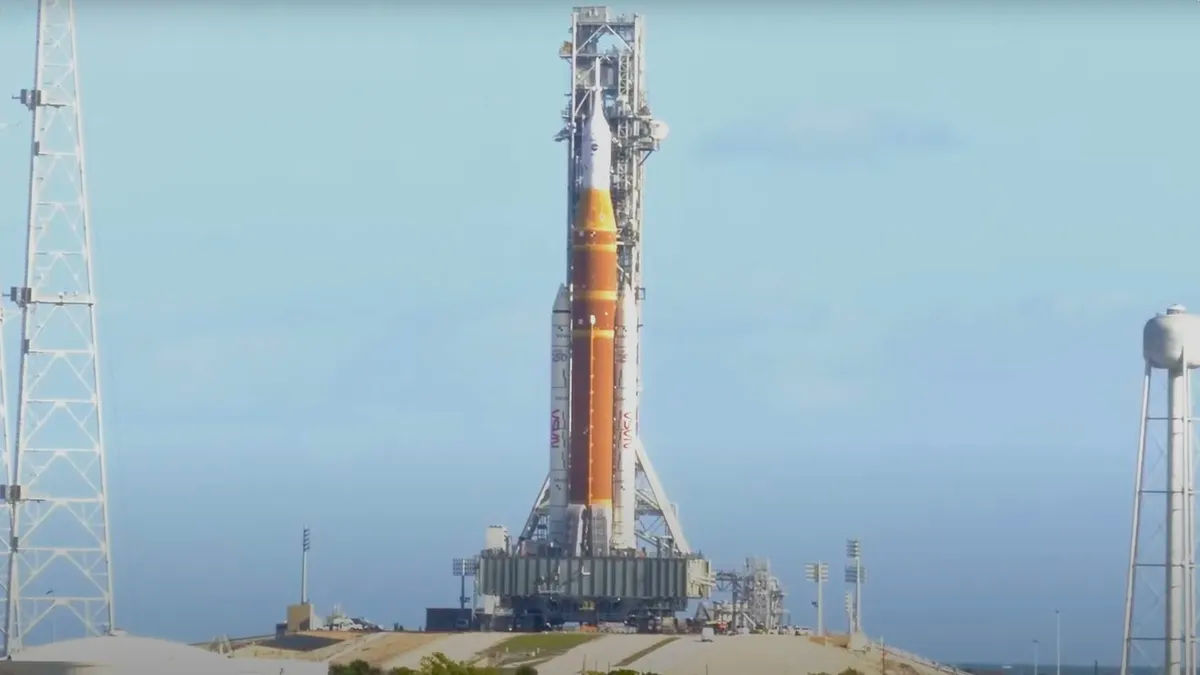
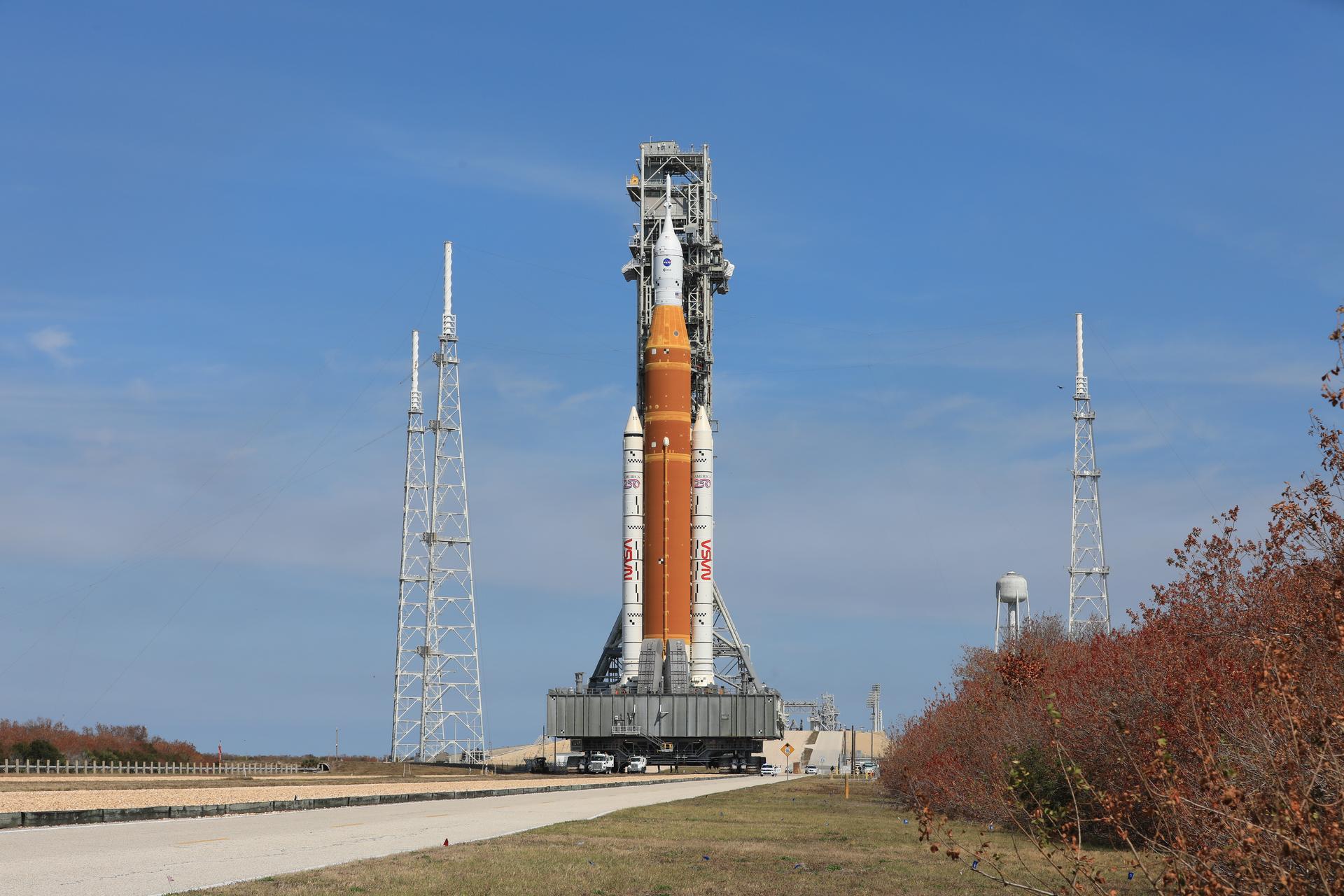
NASA has confirmed that the Artemis II mission is on track to depart for the moon as early as April 1. The announcement follows a rigorous flight readiness review where mission managers assessed the status of the Space Launch System (SLS) rocket and the Orion spacecraft. This mission will mark the first time humans have traveled beyond low Earth orbit since the conclusion of the Apollo program in 1972, representing a significant milestone in the effort to establish a sustained presence in deep space.
The path to this launch window involved a period of meticulous technical adjustment. After identifying an interruption in the flow of helium within the rocket's upper stage, engineers moved the vehicle back to the Vehicle Assembly Building at the Kennedy Space Center. The issue was traced to a quick-disconnect seal that has since been replaced and qualified for flight. To preserve the integrity of the fuel tanks, NASA has decided to move directly to the launch attempt rather than conducting another "wet dress rehearsal" fueling test.
The four-person crew—Commander Reid Wiseman, Pilot Victor Glover, and Mission Specialists Christina Koch and Jeremy Hansen—is scheduled to enter quarantine on March 18. Their ten-day journey will take them on a looping "rendezvous" around the moon's far side, reaching distances where the lunar surface will appear to them as large as a basketball held at arm’s length. This crew is the most diverse to ever leave Earth’s orbit, including the first woman, the first Black man, and the first non-U.S. citizen to make the trip.
While spaceflight is inherently complex, mission managers emphasized that every delay has been an exercise in risk mitigation. Data on new rocket systems historically suggests a 50 percent success rate, but NASA officials noted they have worked to "buy down" that risk through exhaustive testing and hardware monitoring. The focus remains on the safety of the crew, with the agency prioritizing the signals from the hardware over the pressure of the schedule.
This mission stands out not just for the technology involved, but for the patience and precision it requires. In an era often defined by rapid speed, the Artemis program reflects a more deliberate pace—one that treats a technical delay not as a failure, but as a necessary part of ensuring human safety. By choosing to launch only when the hardware is truly ready, NASA is setting a standard for the next generation of exploration, where the goal is not just to reach the moon, but to do so with the permanence and care required for the long journeys ahead.