
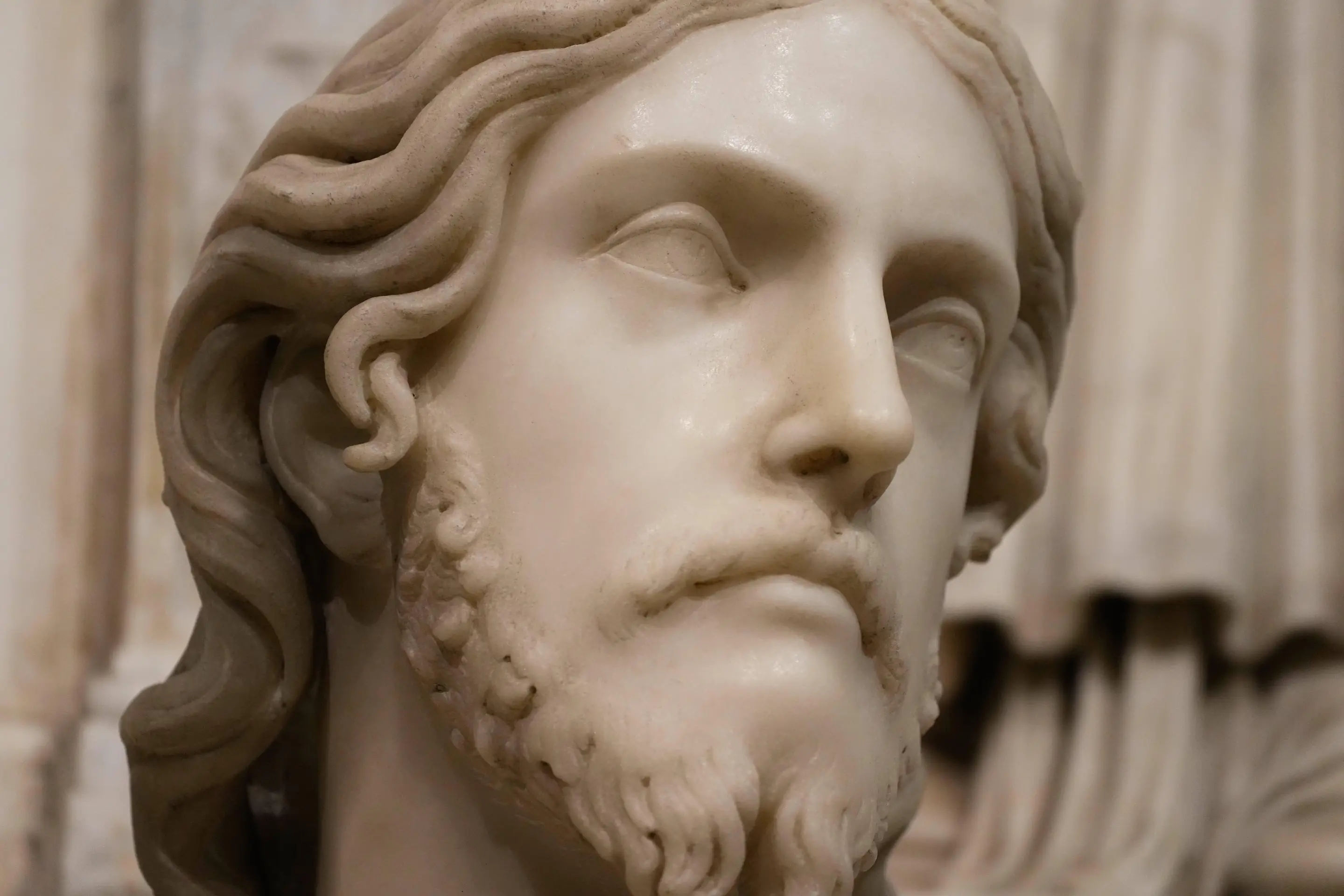
Inside the Basilica of Sant’Agnese fuori le mura in Rome, a white marble bust depicting Christ the Saviour has stood for centuries, integrated into the liturgical life of the church. Long attributed to an anonymous 16th-century Roman artist, the sculpture has recently become the center of a profound art historical debate. Independent researcher Valentina Salerno has presented evidence suggesting the work is actually an overlooked masterpiece by Michelangelo Buonarroti, a claim that arrives just as the world commemorates the 550th anniversary of the artist's birth.
The re-attribution is the result of a decade of archival "detective work" rather than traditional stylistic analysis. Salerno, a member of a Vatican committee celebrating Michelangelo’s legacy, traced notarial records, posthumous inventories, and indirect correspondence to link the bust to the master's final years in Rome. Her research suggests that the work was part of a discreet network through which unattributed pieces were moved into religious institutions for safekeeping, rather than being sold on the open market. This discovery challenges the long-held narrative that Michelangelo systematically destroyed his sketches and unfinished sculptures late in life to preserve his image as a "lone genius."
Central to this new perspective is the theory of a "secret room" and a "pact of indissolubility" among Michelangelo’s most trusted pupils. While historical accounts often suggest the artist burned his preparatory works to hide the "blood, sweat, and tears" of his creative process, Salerno’s findings point toward a different conclusion: that he carefully devised a transfer of materials to his students to ensure his art reached future generations. One document describes a room accessible only with multiple keys held by different individuals, intended to safeguard valuable studies and marble works after the artist's death in 1564.
The claims have been met with a mixture of cautious interest and professional skepticism from the academic community. While some experts, such as professor William Wallace, find Salerno’s archival methodology sound, many remain hesitant to confirm the attribution without a formal peer-review process. The stakes for such discoveries are high; a recently rediscovered sketch of a foot attributed to Michelangelo sold at auction for $27.2 million, highlighting the immense cultural and financial value attached to the artist's name. In the meantime, the Sant’Agnese bust has been placed under the protection of an electronic alarm system as the scholarly investigation continues.
This moment of rediscovery stands out because it humanizes an artist who spent much of his life meticulously curating his own myth. By looking past the "brand" of the effortless genius, researchers are finding a man deeply concerned with legacy and the mentorship of his students. Whether or not the international community eventually reaches a consensus on the Sant’Agnese bust, the search itself reflects our enduring need to connect with the "universal messages" Michelangelo's work continues to convey—beauty, elegance, and the essential questions of the human experience.